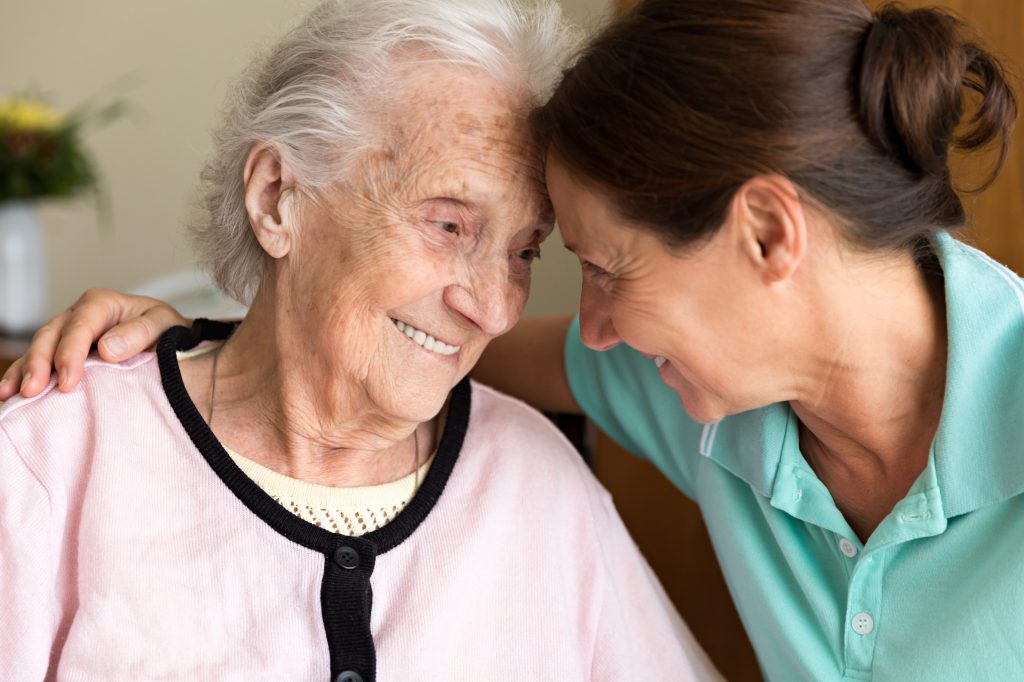
A painful reality with most forms of dementia is that sufferers progressively lose the ability to accurately recall autobiographical memories. This absence of reliable memories leads to frustrating moments for the person living with the disease and can have damaging effects to the person’s sense of self-worth as recall begins to fade. Caregivers often struggle with—and even grieve for—the gradual loss of their loved ones’ personal history and self-identity when facing cognitive decline.
Still, researchers believe that personal memories continue to carry significance for people living with dementia, even as they progress through the stages of the disease. A 2021 study confirms that while recall gets progressively worse, past memories do not always just go away.
“People with Alzheimer’s disease value reliving autobiographical memories, are able to retrieve such memories when they need to confirm they are still the same person they were before the dementia, and experience the same emotions associated with these intrinsically personal memories.”
Back to the Good Old Days
Many people experience feelings of nostalgia; those reflexive moments that bring back vivid recollections from days gone by. It is part of the human condition to long for simpler times on occasion. Certain situations and conditions can bring these feelings out in us, sometimes without warning.
People living with dementia can still experience nostalgia, even as the ability to consciously recall those autobiographical memories begins to slip away. If harnessed correctly, nostalgia can spark joyful memories that lead to meaningful experiences in the moment and positive interactions with caregivers.
Nostalgia: Delicate and Potent
Nostalgia is a term with Greek origins, yet was first coined by a Swiss doctor in the 1600s that used it to describe “the pain of returning” and even referred to nostalgia as a disease faced by soldiers away from home, longing for simpler times. In short, nostalgia can be complicated.
Most studies point to nostalgia offering short-term benefits for improving a person’s mood. For dementia sufferers, these positive moments can have somewhat lasting effects under the right conditions. In fact, the power of nostalgia is often felt during times of uncertainty and transition, which certainly describes the weeks and months following a dementia diagnosis.
There are two types of nostalgia commonly recognized: restorative and reflective. Quite simply, reflective nostalgia focuses on enjoying the emotions that come from past events, as opposed to recreating them. For this reason, reflective nostalgia is known to be more helpful for caregivers hoping to harness the positive emotions that reflecting on past events can bring.
Nostalgia Triggers That Caregivers Can Use
Some ways to trigger feelings of nostalgia are more interactive than others, though caregivers can learn which sensory tools work best for their own loved one.
Music
Perhaps the most powerful nostalgia trigger, music is known to enhance moments and significantly boost mood. For those living with dementia, hearing music that was important to them in their formative years can bring a smile to their face, trigger healthy movement (even dancing), and in some cases leads to singing or speaking, even if the person has become relatively non-verbal. This can happen throughout the stages of the disease.

Music can be a powerful tool for caregivers also and there is no shortage of ways to cue up a loved ones’ favorite artist to help create joyful moments of reflection or even to soothe them in times of distress. Caregivers should consider using one of the many mobile apps or specialized technologies designed to help better organize and access meaningful music when the moment calls for it. If you find that radio jingles or television theme songs are equally as effective in evoking these positive feelings of nostalgia, be sure to include these short clips in the personal playlists as well.
Photographs
Lamonda Robinson is a St. John’s Home Therapeutic Recreation Specialist who works almost exclusively with long-term care residents living with dementia. “There are many old pictures on the wall,” Robinson says. She also describes special therapy rooms on some of the floors that have old photos and advertising pieces that bring temporary joy to residents and their loved ones. Of recognizable photos from the past, Robinson says “they really bring back memories and are great conversation starters for residents and family members.”
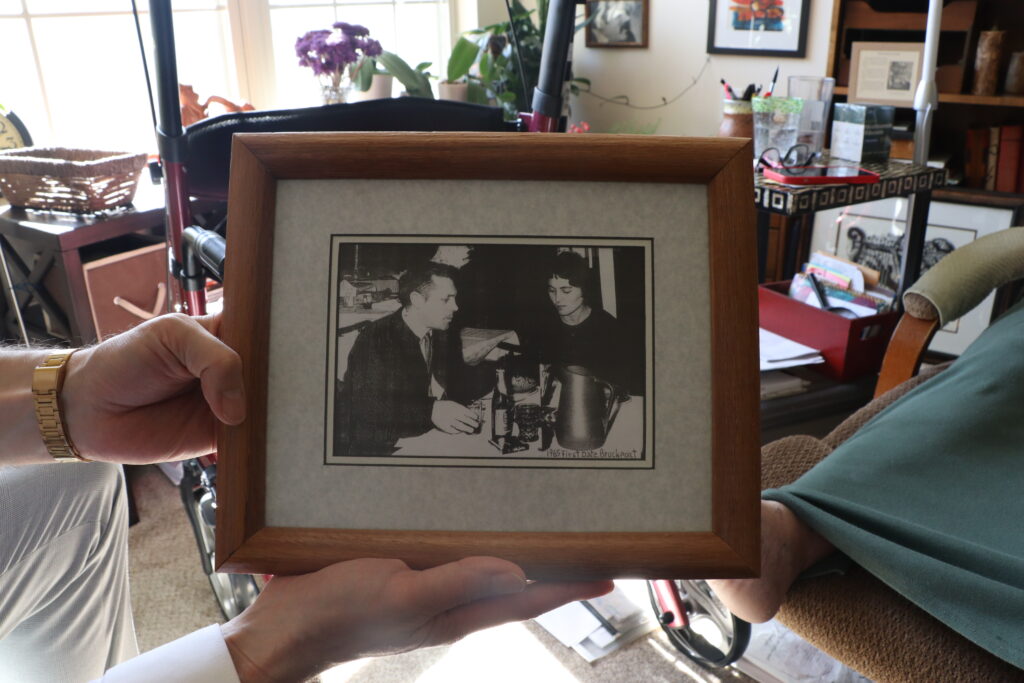
Personal photos—organized in photo albums, collages, or even digital picture frames—are known to reinforce joyful memories and even provide comfort and a semblance of stability. Along with music, photos are a key prompt used in reminiscence therapy, a formal technique that aims to tap into past experiences to enhance well-being for people living with dementia or other forms of cognitive decline.
Objects
Terry Neilon is community life representative at Brickstone by St. John’s. While this independent living community does not provide dementia care, Neilon has found that bringing items like consumer products from decades past is an interactive way to start conversations with residents.
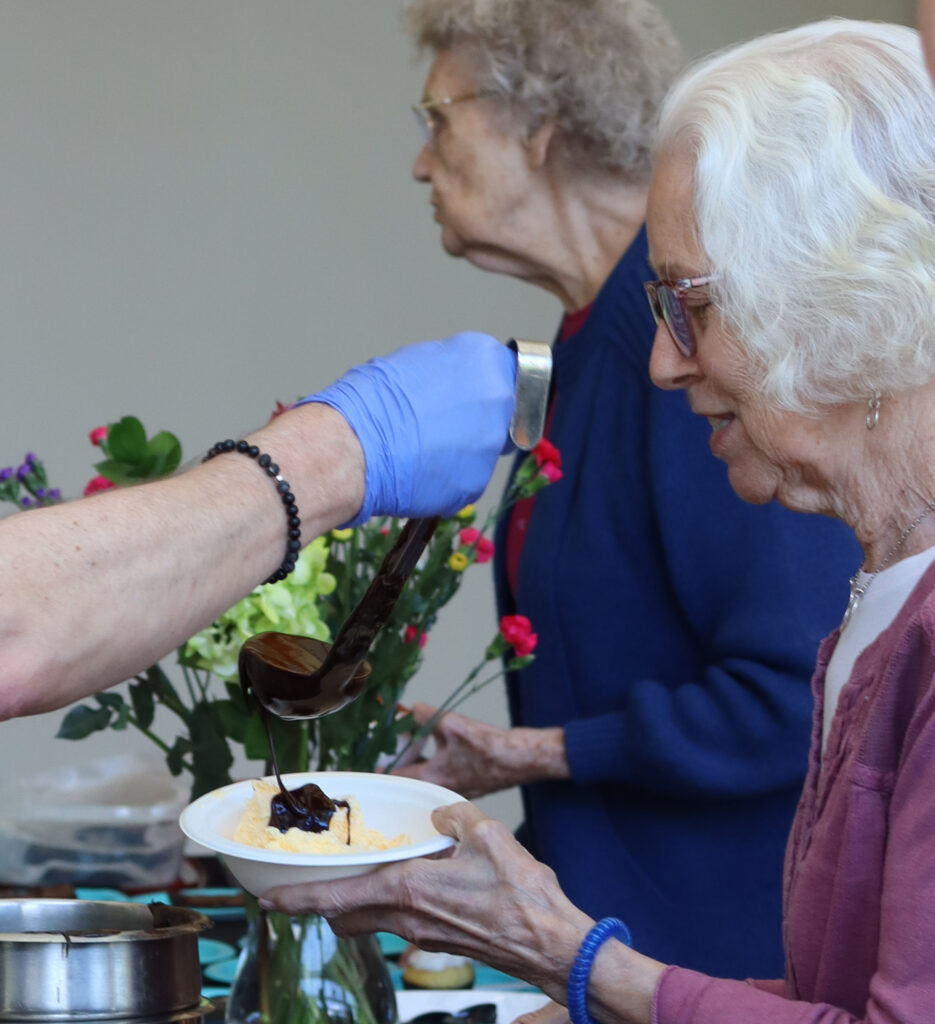
When Neilon uses antique ice cream scoops that were passed on to him, he gets nostalgic about his late grandmother making him ice cream floats in his youth. Using them to serve during the ice cream socials he hosts at Brickstone, Neilon senses those same nostalgic feelings from participating residents. “They remind people of getting ice cream during their childhoods,” says Neilon about the antique utensils. “And it reminds them of the fun times getting an ice cream with their families.”
There are dozens of items and iconic products that can help caregivers spark positive reminiscing. A few examples of interactive items that can bring joy include the Polaroid Instant Camera, Rubix Cube, LEGO blocks, and simple handheld games. Caregivers should not hesitate introducing new ways to help make their loved one comfortable and to bring joy to their day. Be sure to keep it simple and do not be afraid to try new things. You never know what might make a difference!