
Just like television shows and movies use music to set the mood for an audience, caregivers can use this powerful tool to connect with loved ones, calm the chaos, and reinforce old routines in new ways.
Soothing music can bring calmness during times of chaos
Several studies have confirmed that music can have a positive effect on the mood of people living with dementia. Increased levels of eye contact, joy, and overall engagement have all been observed after listening to music.
Research has also shown that music can lead to decreased agitation. Caregivers can try playing their loved ones’ favorite music during times of distress as a way to deescalate ongoing tension. If you are caring for someone who often becomes agitated at a certain time of day, try incorporating music listening sessions just prior to those periods of distress. You may be surprised with the results.
Music can evoke pleasant memories
Another positive response to hearing music can be feelings of nostalgia. Ask any recreation specialist working in senior centers, adult day programs, or long-term care, and they will tell you all about certain participants who do not seem to engage in any of the activities they offer. That is until music—perhaps a particular type of music or a certain artist—is introduced. Then, like magic, the person is suddenly engaged in the moment in new and exciting ways.
“For folks living with dementia, sometimes music accesses that part of the brain that nothing else can,” says Karen Schillinger, an occupational therapy assistant at St. John’s Home who also facilitates the community’s St. John’s Singers Chorus. “So, they might be freer with music than they are with the spoken word.”
This phenomenon is not a coincidence as music has long been considered a great unifier. Caregivers at home can utilize music to help reminisce about past memories as a way to offset feelings of loneliness or depression. Music can create context in our minds that spoken word alone cannot. The next time you attempt to look at old pictures or simply discuss pleasant times from years past, put on some familiar music from the era you are discussing. The results may surprise you.
Music can enhance, and even replace established rituals and traditions
You may find that your loved one has lost interest in certain events or activities they once found enjoyable. Maybe your loved has lost interest (or the ability) to read books and this was an activity they used to relax before going to sleep for the night. If this is the case, try replacing reading time with time spent listening to soft, soothing music just prior to bedtime. It just might work.
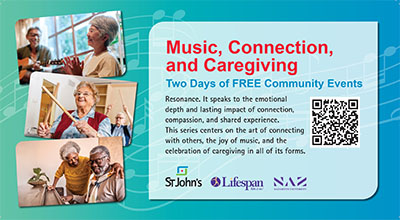
To learn more about the power of music and how caregivers can harness music to better connect with their loved ones and their communities, join St. John’s, Lifespan of Greater Rochester, and Nazareth University for two days of free community events. Register for Music, Connection and Caregiving on November 12 and 13.
Resources:
How Can Music Help Create Better Caregiver Connections?
Nostalgia Can Spark Meaningful Moments and Powerful Interactions
10NBC: Power of Music Therapy Brings Joy and Healing
Vero News Video: Music Therapy Comforts, Soothes Those with Varying Degrees of Dementia