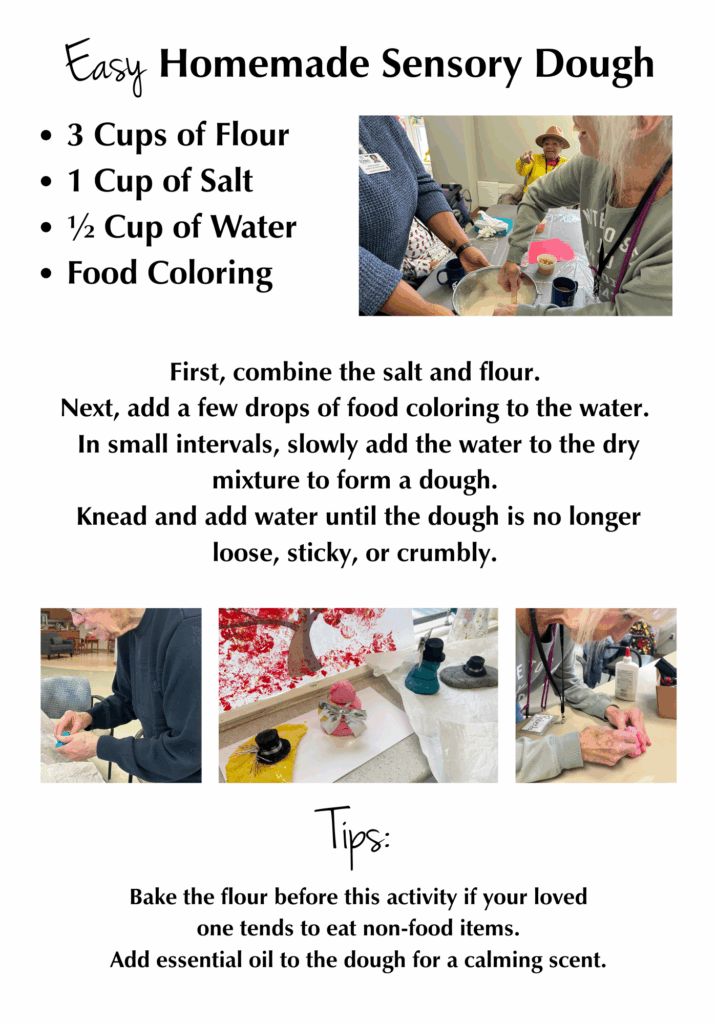
Winter can be a challenging season for people living with dementia. Shorter days, colder temperatures, and fewer opportunities to go outdoors can increase restlessness, isolation, and changes in mood. Sensory-based activities that gently engage sight, sound, touch, smell, and taste offer a powerful way to provide comfort, spark connection, and support well-being indoors during the winter months.
Below are simple, meaningful sensory activities caregivers can use at home or in care settings, regardless of cognitive ability.
1. Bring Nature Indoors
Even when it’s cold outside, elements of nature can be comforting.
- Create a tabletop garden with herbs, faux flowers, or pine branches
- Offer smooth stones, pinecones, or leaves to touch and explore
- Play nature sounds like rainfall, birds, or wind chimes
Why it helps: Familiar natural textures and sounds can reduce anxiety and promote calm.

2. Music and Sound Experiences
Music often remains accessible long after other memories fade.
- Play favorite songs from earlier decades
- Use simple instruments like shakers, bells, or drums
- Listen to seasonal music and discuss memories it brings up
Why it helps: Music can improve mood, reduce agitation, and encourage verbal and non-verbal expression.
3. Tactile and Comfort Activities

Hands-on activities provide grounding and reassurance.
- Fold towels, scarves, or soft blankets
- Explore textured items like fleece, knitted squares, or sensory pillows
- Look through or organize photo albums and scrapbooks
Why it helps: Repetitive, purposeful motions can be soothing and restore a sense of usefulness.
4. Familiar Smells & Tastes
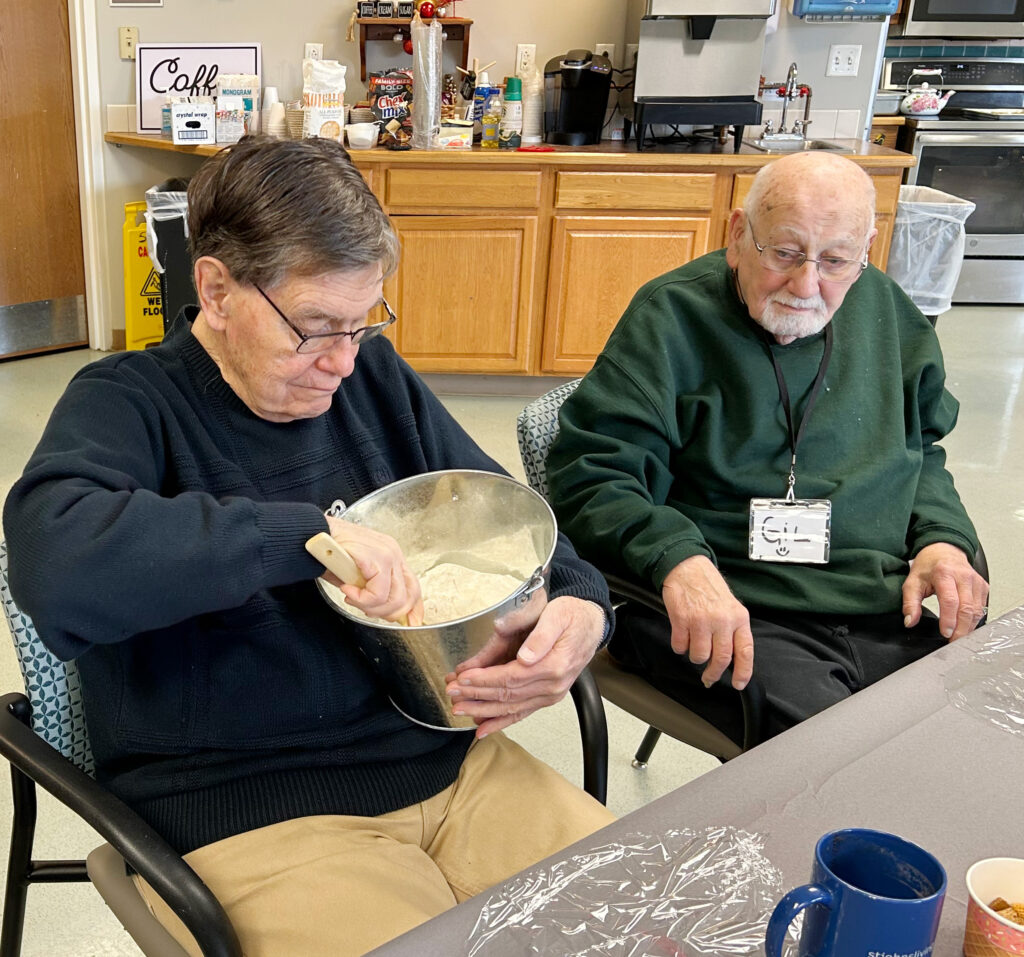
Smell is closely linked to memory and emotion.
- Simmer cinnamon sticks, vanilla, or citrus peels
- Offer warm beverages like cocoa, tea, or soup
- Bake simple recipes together, even if participation is just stirring
Why it helps: Familiar scents and flavors can spark memories and create a sense of comfort and safety.
5. Creative Expression Without Pressure
Art activities don’t need to be “correct” to be meaningful.
- Watercolor painting or coloring with large pencils
- Clay, dough, or soft modeling materials
- Collage using magazines, fabric scraps, or photos
Why it helps: Creative expression supports self-esteem and emotional release, even when words are difficult.
A Gentle Reminder for Caregivers
There is no “right” way to engage someone living with dementia. Some days, an activity will be met with enthusiasm; other days, simply sitting together quietly is enough. What matters most is presence, patience, and compassion.
Small sensory moments can make winter days feel brighter and more meaningful.